

Ask ten people what a yellow rose means and you’ll get a few different answers. Some say friendship. Some say jealousy, because that’s what older books claimed. A few will shrug and say it’s just a pretty flower. They’re all a little bit right, and that’s what makes flower meanings so interesting.
Flowers picked up their symbolism over thousands of years, from myths, religions, royal courts and village festivals. Some meanings are nearly universal (nobody misreads a dozen red roses). Others change the moment you cross a border. This guide covers the flowers people buy most, what they usually stand for, and where the confusion tends to happen, so you can pick something that says what you actually mean.
Where Flower Meanings Come From
People have tied flowers to gods and rituals for a very long time. The Greeks linked the iris to the messenger goddess Iris, and lotus imagery appears all over ancient Egyptian art. But the habit of assigning a meaning to each flower, like a vocabulary, really took off in the 1800s.
In Victorian England, this was called floriography. Public displays of feeling were frowned on, so people sent small bouquets, often tussie-mussies, and let the flowers do the talking. Printed dictionaries told you what to pick. A bouquet could say “I’m interested,” “I’m not,” or “I know what you did.”
The catch is that those dictionaries didn’t agree with each other. One listed a flower as “devotion” while another said “deceit.” So treat any list of meanings, including this one, as a guide to tradition rather than a rulebook.
Common Flowers and What They Mean
Rose
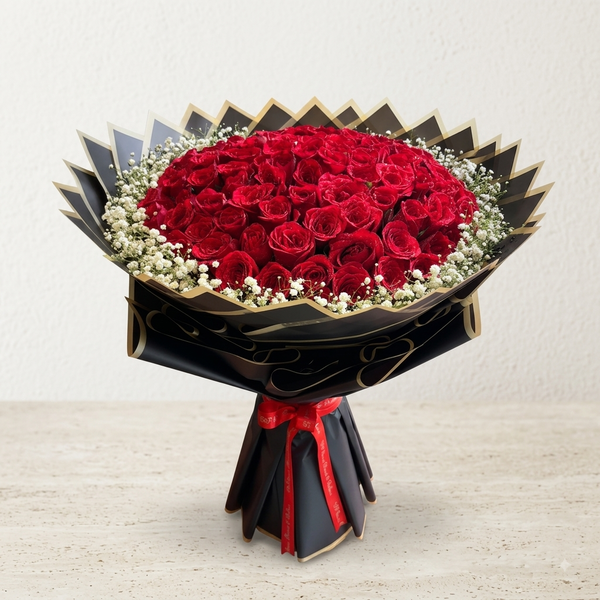
Roses are the default flower for love, and color does most of the work.
- Red: romantic love and desire. The classic.
- Pink: admiration, thanks, affection without the intensity.
- White: purity, fresh starts, and also remembrance. That’s why they show up at both weddings and funerals.
- Yellow: friendship and warmth. Older sources link it to jealousy, but hardly anyone reads it that way now.
- Orange: excitement and enthusiasm.
- Lavender: enchantment, sometimes read as love at first sight.
Good for: anniversaries, Valentine’s Day, thank-yous, birthdays.
Lily
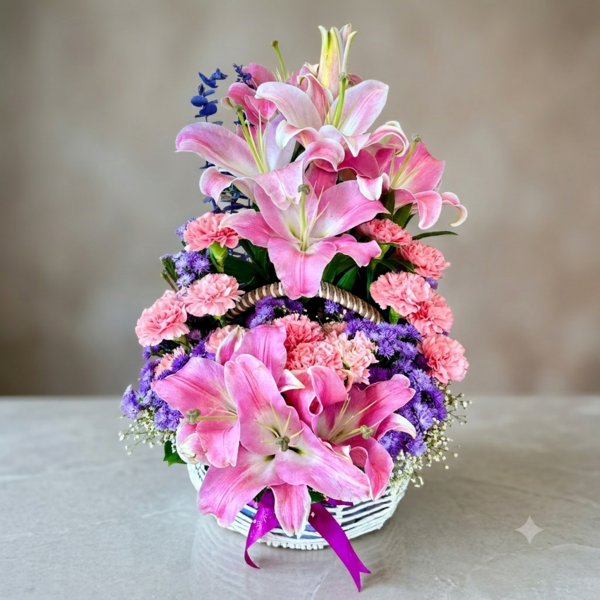
Lilies carry a formal, slightly solemn feel. White lilies stand for purity and are common at weddings and memorials. Stargazer lilies, the loud pink ones with dark speckles, feel more celebratory and are often linked with prosperity. Tiger lilies lean toward pride and confidence.
One practical warning: lilies are toxic to cats, and even the pollen can be dangerous. If the recipient has a cat, pick something else.
Good for: weddings, sympathy arrangements, formal occasions.
Tulip
Tulips arrive in early spring, so they’ve come to mean fresh starts and cheerfulness. Red tulips traditionally signal deep love, yellow ones stand for happy thoughts, purple for royalty, and white for forgiveness.
Good for: birthdays, Easter, Mother’s Day, “thinking of you” gifts.
Sunflower
Sunflowers follow the sun across the sky as they grow, which is why they stand for loyalty, warmth and optimism. They’re also just hard to be gloomy around. Big, bright and a little goofy.
Good for: get-well gifts, friendship, congratulations, summer celebrations.
Orchid
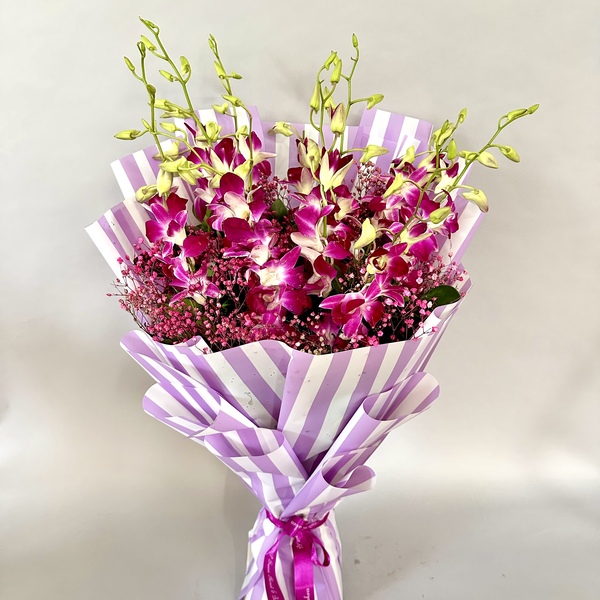
Orchids read as elegant and expensive, and they last far longer than most cut flowers. They’ve stood for beauty and refinement for centuries, and in many East Asian cultures they also suggest harmony and abundance. A potted orchid makes a safe, polished gift for a new home or a business occasion.
Good for: housewarmings, corporate gifts, milestones.
Carnation
Carnations get overlooked because they’re cheap, but they have a lot to say. Pink carnations are tied to mothers and are the traditional Mother’s Day flower. Red ones mean admiration, and white ones suggest pure love and luck. Yellow carnations traditionally meant disappointment, so skip them if you’re sending a message of love.
Good for: Mother’s Day, graduations, big casual bouquets.
Daisy
Daisies mean innocence and simplicity. They’ve long been linked with children and with loyal love, and there’s an old tradition of daisies standing for “I’ll keep your secret.” It’s an easy flower to give without it feeling like a big statement.
Good for: new babies, friendships, casual gifts.
Peony
Peonies are the flower people fall for at first sight. Big, ruffled and fragrant, they stand for romance, prosperity and a happy marriage. In China, the peony has been called the “king of flowers” and is linked with wealth and honor. They’re also seasonal and short-lived, usually late spring into early summer, which is part of their appeal.
Good for: weddings, anniversaries, bridal bouquets.
Lavender
Lavender is about calm. It’s the flower you give someone who’s stressed, run down or grieving. It also carries meanings of devotion and grace, and it works well dried, so the gift lasts.
Good for: self-care gifts, comfort, wedding decor.
Chrysanthemum
This is the flower where culture matters most. In China, Japan and much of East Asia, chrysanthemums stand for long life and happiness, and Japan uses one as an imperial emblem. In parts of Europe, including France and Italy, they’re strongly tied to funerals and All Saints’ Day. Know your recipient before you buy.
Good for: autumn celebrations in Asian traditions, remembrance in some European ones.
Lotus
The lotus grows out of muddy water and opens clean, which is why it’s such a strong image of rising above hardship. It’s sacred in Hinduism and Buddhism, where it stands for purity and spiritual awakening, and it’s India’s national flower.
Good for: spiritual and cultural gifts, meditation spaces, decor.
Marigold
Marigolds are everywhere in Indian celebrations. They’re strung into garlands, piled at temple offerings and woven into wedding decor because they’re seen as auspicious. In Mexico, they’re the flower of Día de los Muertos, where their color and scent are said to guide the dead back to their families.
Good for: festivals, ceremonies, decoration.
Jasmine
Jasmine’s scent does the talking. It’s tied to love, sensuality and grace, and white jasmine is also associated with purity. It’s a staple of South Asian weddings and often worn in the hair.
Good for: weddings, romantic gestures, traditional ceremonies.
Hydrangea
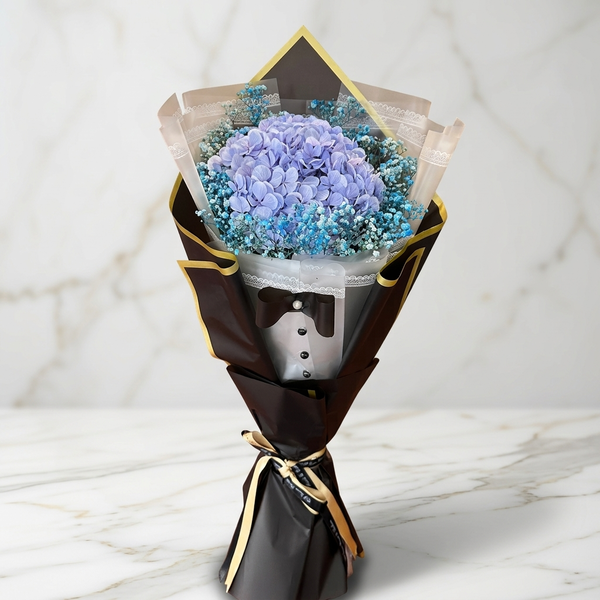
Hydrangeas are big, full and lush, and they usually mean gratitude or heartfelt feeling. Pink ones lean romantic. Blue ones have a mixed history, sometimes read as apology and sometimes as coldness, so add a card if the message matters.
Good for: thank-yous, Mother’s Day, wedding decor.
Gerbera Daisy
Gerberas are bright, simple and come in nearly every color. They mean cheer, and that’s about it, which is a good thing. If you want to lift someone’s mood without overthinking it, this is your flower.
Good for: birthdays, get-well gifts, congratulations.
Iris
The iris takes its name from the Greek goddess of the rainbow, and it stands for hope, faith and wisdom. Purple irises in particular have a royal, dignified feel.
Good for: encouragement, graduations, gestures of respect.
Daffodil
Daffodils are one of the first signs that winter is ending, so they stand for new beginnings and hope. Giving someone a bunch when they’re starting a new job or recovering from a rough patch is a quiet way of saying things are looking up.
Good for: new jobs, recovery, spring occasions.
Lilac
Lilac season is short and the scent is unforgettable, which is probably why they’re linked with nostalgia and first love. Purple lilacs in particular are the “first love” bloom.
Good for: sentimental gifts, spring celebrations.
Poppy
Red poppies are worn in Britain and the Commonwealth around Remembrance Day to honor those lost in war. Outside that context, poppies have also symbolized sleep, dreams and consolation.
Good for: remembrance, memorials.
Baby’s Breath
Baby’s breath is usually the supporting act, filling out bouquets and wedding arrangements. It stands for lasting love and innocence, and it’s having a comeback as a star in its own right, especially in big, airy bunches.
Good for: weddings, baby showers, filler in any bouquet.
What Colors Add to the Message
If you don’t know a specific flower’s meaning, color is a decent fallback.
- Red: love, passion, courage
- Pink: gratitude, admiration, tenderness
- White: purity, peace, sympathy, new starts
- Yellow: friendship, happiness, optimism
- Orange: energy, excitement, pride
- Purple: dignity, admiration, a bit of royalty
- Blue: calm, trust, something rare (true blue flowers are unusual, so many are dyed)
- Green: renewal, health, luck
- Peach: appreciation, sincerity, modesty
Matching Flowers to the Occasion
Romance: red roses, peonies, tulips, orchids
Weddings: white roses, peonies, lilies, jasmine, baby’s breath
Birthdays: sunflowers, gerberas, mixed seasonal bouquets
Get well: sunflowers, daffodils, daisies, yellow roses
Sympathy: white lilies, white roses, carnations (chrysanthemums only where they’re customary)
Thank you: hydrangeas, pink roses, tulips, peach flowers
New baby: daisies, carnations, soft pastel mixes
Congratulations: sunflowers, orchids, stargazer lilies
Apology: white roses, lavender, purple hyacinths
A Few Practical Tips
Know the person. A favorite color or flower beats any symbolism chart. If your friend loves tulips, tulips it is.
Check cultural context. This matters most with chrysanthemums, white flowers and anything for a funeral or a wedding. When in doubt, ask someone from that community.
Check for allergies and pets. Lilies and cats are the big one, but plenty of people are sensitive to strong scents like jasmine and lilac.
Buy what’s in season. Seasonal flowers cost less, look better and last longer. Peonies in December are a different experience than peonies in May.
Add a note. Nobody expects the recipient to decode a bouquet. One line explaining why you chose it does more than any dictionary.
FAQ’s
Which flower means love?
The red rose is the most recognized, but peonies, tulips and orchids are all common romantic choices.
Which flower means friendship?
Yellow roses, sunflowers and daisies are the usual picks.
What flowers are appropriate for sympathy?
White lilies, white roses and carnations are common. Chrysanthemums are the standard in some countries, but in others they’re only for funerals, so check first.
Which flowers stand for new beginnings?
Daffodils, tulips, white roses aur daisies, sab fresh starts aur naye chapter ko represent karte hain, jismein daffodil sabse strong symbol maana jaata hai kyunki yeh sardi khatam hone ka pehla sign hota hai.
Do flower meanings change between cultures?
Yes, quite a bit. Chrysanthemums are the best-known example: symbols of long life in much of East Asia, and funeral flowers in parts of Europe.
What’s a good flower for saying thank you?
Hydrangeas and pink roses are the best choices for gratitude, both convey warmth and genuine appreciation. Pink carnations are also an affordable, meaningful option.
Is it okay to ignore the meanings?
Honestly, yes. If you know someone loves gerberas, give them gerberas. The meaning is a bonus, and the thought is the point.
